
ABA Therapy at Daycare and Nursery in the UK
Home is where skills are built. Nursery is where they get tested.
Plenty of children do beautifully in one-to-one sessions and then struggle the moment they're in a room with fifteen other children, three adults, a noise level nobody warned them about, and an instruction aimed at the group rather than at them.
That gap is normal. It's also fixable — but only if someone works on it where it happens.
ABA therapy at daycare bridges the distance between what your child can do and what they can do there.

What Is ABA Support in a Daycare Setting?
ABA therapy at daycare is behaviour-analytic support delivered inside your child's nursery, pre-school or childcare setting. A qualified behaviour analyst observes your child in the real environment, designs strategies that fit how the setting actually runs, and works alongside the staff who are with your child every day.
It usually combines three things:
Direct support for your child
during the parts of the day they find hardest.
Practical training for the setting's staff
so support continues when we're not there.
Consistency between home and nursery
so your child isn't learning two different sets of rules.
What Nursery Difficulties Look Like
Settings usually raise concerns about some version of the following:
Not responding to instructions given to the whole group
Difficulty sitting for circle time, story time or snack
Distress at transitions — coming in, moving rooms, tidying up, going home
Playing alongside other children but not with them
Hitting, biting, pushing or grabbing during shared play
Meltdowns triggered by noise, crowding or unexpected change
Difficulty with toileting, mealtimes or getting coats and shoes on
Leaving the group, or attempting to leave the room
Communication that staff can't yet interpret
None of these mean your child is "not coping with nursery." They mean the demands of the environment currently exceed the skills your child has been taught for it. That's a teaching problem, and teaching problems have solutions.
How We Work With Your Setting
Free consultation.
We talk to you first. Nothing happens in a setting without your consent and the setting's agreement.
Observation in the setting.
The therapist spends one-to-one time with your child in their daycare setting, observing what happens during everyday activities — the triggers, routines, interactions, and moments that may be challenging. Where a fuller developmental picture is needed, our children's autism and behaviour assessments in the UK can run alongside.

A plan the setting can realistically use.
This is the part providers get wrong. A strategy that needs one adult permanently attached to one child will not survive contact with a real nursery room. We design around actual staffing.
Staff training and modelling.
We show the key person and room staff how to use the strategies, then coach them while they do it.
Direct sessions where needed.
Targeted support during the specific parts of the day your child finds hardest.
Review with everyone in the room.
Progress reviewed with you and the setting together, with strategies adjusted as your child develops.
Working Alongside SEN Support
Early years settings in England that receive local authority funding must have regard to the SEND Code of Practice (2015), and are expected to identify a SENCO. Where a child needs additional help, settings follow the graduated approach on a cycle of around six weeks.
In practice, that means:
Observation and data that strengthens the "assess" stage
Specific, measurable targets the setting can write into its plan
Strategies your child's key person can genuinely implement day to day
Written progress evidence for review meetings
Documentation that can support an EHCP application where one is being pursued
What We Work On
Group participation.
Sitting, attending, waiting a turn, following instructions given to the group rather than to your child by name.
Transitions.
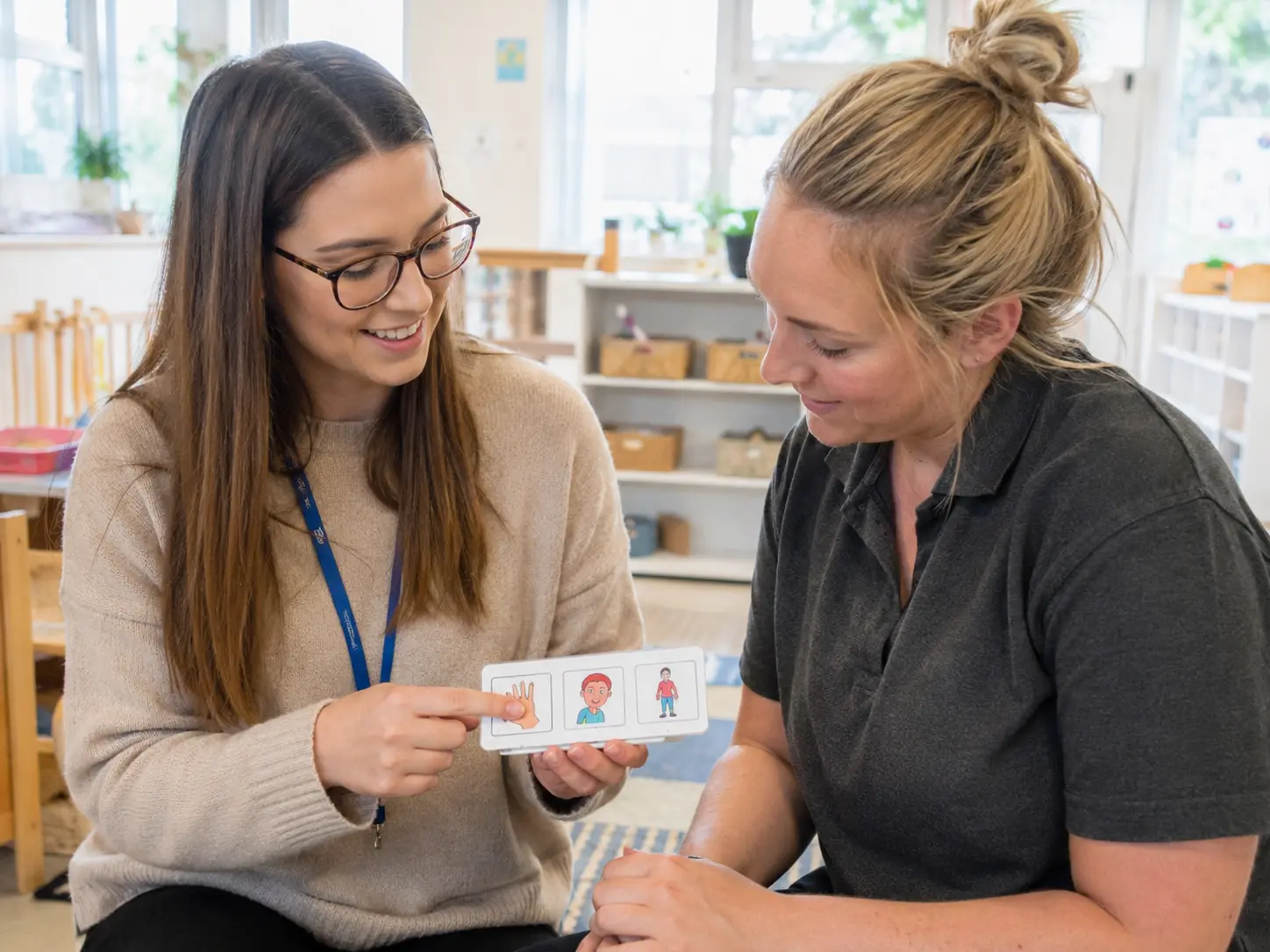
Arriving, moving between activities, tidying up, going outside, going home — with warnings, visual supports and predictable routines.
Communication with peers and staff.
Asking for help, requesting, refusing appropriately, and being understood by adults who don't know your child as well as you do.
Play and social skills.
Moving from playing near other children to playing with them.
Regulation.
Coping with noise, crowding, disappointment and change.
Independence.
Coats, shoes, toileting, handwashing, mealtimes.
School readiness.
Preparing for the reception transition well before it arrives.
Our Standards
Qualified, registered practitioners.
Behaviour analysis in the UK is credentialled through the UK Society for Behaviour Analysis (UK-SBA), whose register has been accredited by the Professional Standards Authority since January 2023. Registrants must evidence a current DBS check, safeguarding training and professional liability insurance.
Enhanced DBS-checked staff.
Every practitioner working in a childcare setting holds a current enhanced DBS check, and we provide documentation to the setting on request.
Respectful of the setting.
We're guests in someone else's room. We work with the key person, not around them, and we don't hand staff strategies they have no realistic capacity to deliver.
Consent-led practice.
We use positive reinforcement. We do not use punishment procedures. We don't teach compliance for its own sake, and we treat your child's refusal as communication.
Consistency with home.
Strategies used at nursery mirror those used at home. Where families also receive in-home ABA therapy across the UK, the same behaviour analyst oversees both.
Where We Work
We support children in nurseries, pre-schools, daycare settings and childminder provision across the United Kingdom, including the towns and cities below, plus surrounding towns and commuter areas.
Where in-person attendance isn't practical every week, staff training and review can also run through virtual autism therapy sessions available UK-wide. You can also read more about our wider approach to ABA therapy at home in UK families.
Talk to our team →Frequently Asked Questions
Most do, once the purpose is clear. Settings are generally glad of specialist input, particularly where staff are managing behaviour they haven't been trained for. We approach it collaboratively, and we always ask the setting what would actually be workable for them before proposing anything.
No. Support is based on observed needs, not a diagnostic label. Under the SEND Code of Practice, settings are expected to respond to a child's needs as they emerge rather than wait for a diagnosis — which matters, given that as of March 2026 NHS England recorded 270,701 open referrals for suspected autism, with around 90% waiting beyond the 13 weeks NICE recommends.
Not quite. Full-time one-to-one support is a staffing arrangement, usually funded through an EHCP. What we provide is specialist behaviour-analytic input — assessment, strategy design, staff training and targeted direct work. In many cases it reduces the need for constant one-to-one over time, because the goal is independence rather than permanent adult attachment.
We work hard to avoid that. Wherever possible, strategies are embedded in the setting's normal routines and applied inclusively — visual timetables, clearer transition warnings and structured turn-taking benefit plenty of children in the room, not just yours.
Yes, and it's worth starting early. School readiness work is far more effective across the year before the move than in the final few weeks.
Ready to support your child's setting?
Book a free consultation and find out whether ABA support at daycare is the right fit for your child and their nursery.