
Virtual Autism Therapy in the UK
Expert support for your child, without the postcode lottery.
Behaviour analysts aren't evenly distributed across the UK. If you live in a city, you have options. If you live in rural Wales, the Highlands, mid-Devon or a smaller town in the North East, you may have none within a reasonable distance.
Virtual autism therapy removes distance from the equation. Same qualified practitioners, same evidence-based approach — delivered live into your living room.
What Is Virtual Autism Therapy?
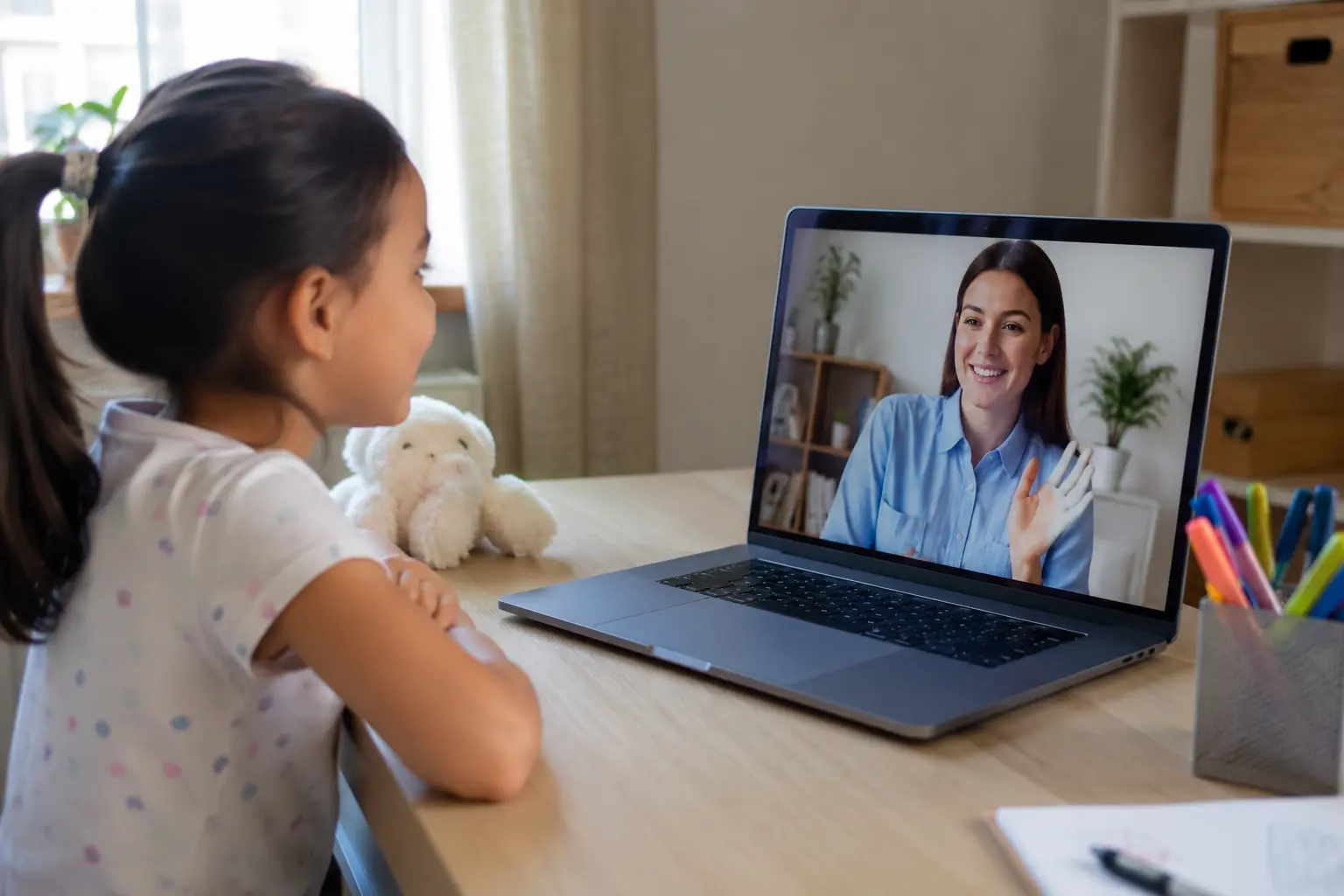
Virtual autism therapy is behaviour-analytic support delivered by live video link, in which a qualified behaviour analyst observes your child in their own environment, coaches you in real time, and adjusts the programme based on what they see.
You are not watching a pre-recorded course. A practitioner is on the call, watching what's happening in your home, and telling you what to do differently in the moment.
Sessions typically involve:
Live observation
of your child during play or a specific routine.
Real-time coaching
as you use a strategy, with immediate feedback.
Programme design and review
with a behaviour analyst.
Video review
where you send short clips between sessions for detailed feedback.
Data tracking
so progress is measured, not assumed.
Does Online ABA Actually Work?
It's a fair question. Research into telehealth-delivered behaviour analysis has found that parents can be trained to high levels of fidelity through remote coaching, with studies reporting parent adherence rates above 97% and skill mastery, maintenance and generalisation comparable to in-person delivery. Studies on remotely coached parent-implemented treatment for challenging behaviour have reported reductions in problem behaviour exceeding 90%.
Where remote delivery is strongest
Parent and caregiver coaching — the best-evidenced use of telehealth in this field
Programme design, supervision and review
Behaviour consultation for a specific difficulty
Ongoing support between in-person visits
Where it has limits — and we'll say so
Very young children with limited attention can find video sessions hard to engage with directly
Home environments have distractions a practitioner can't physically manage
Some hands-on teaching genuinely benefits from a practitioner in the room
Child outcomes in the telehealth research are more variable than parent-training outcomes. That's why we'll tell you honestly if we think your child needs in-person delivery instead.
Who Virtual Therapy Suits
Online autism therapy tends to work well if:
You live somewhere with limited local provision
Travel, work patterns or other children make regular home visits difficult
Your child is anxious around new people entering the house
You want frequent, shorter contact rather than fewer long sessions
You need support quickly while on an NHS waiting list
You already have in-person support and want extra coaching between visits
Extended family in another location need training too
How Online Sessions Work
Free consultation.
A short video call to understand your situation and check that remote delivery is a sensible fit.
Remote assessment.
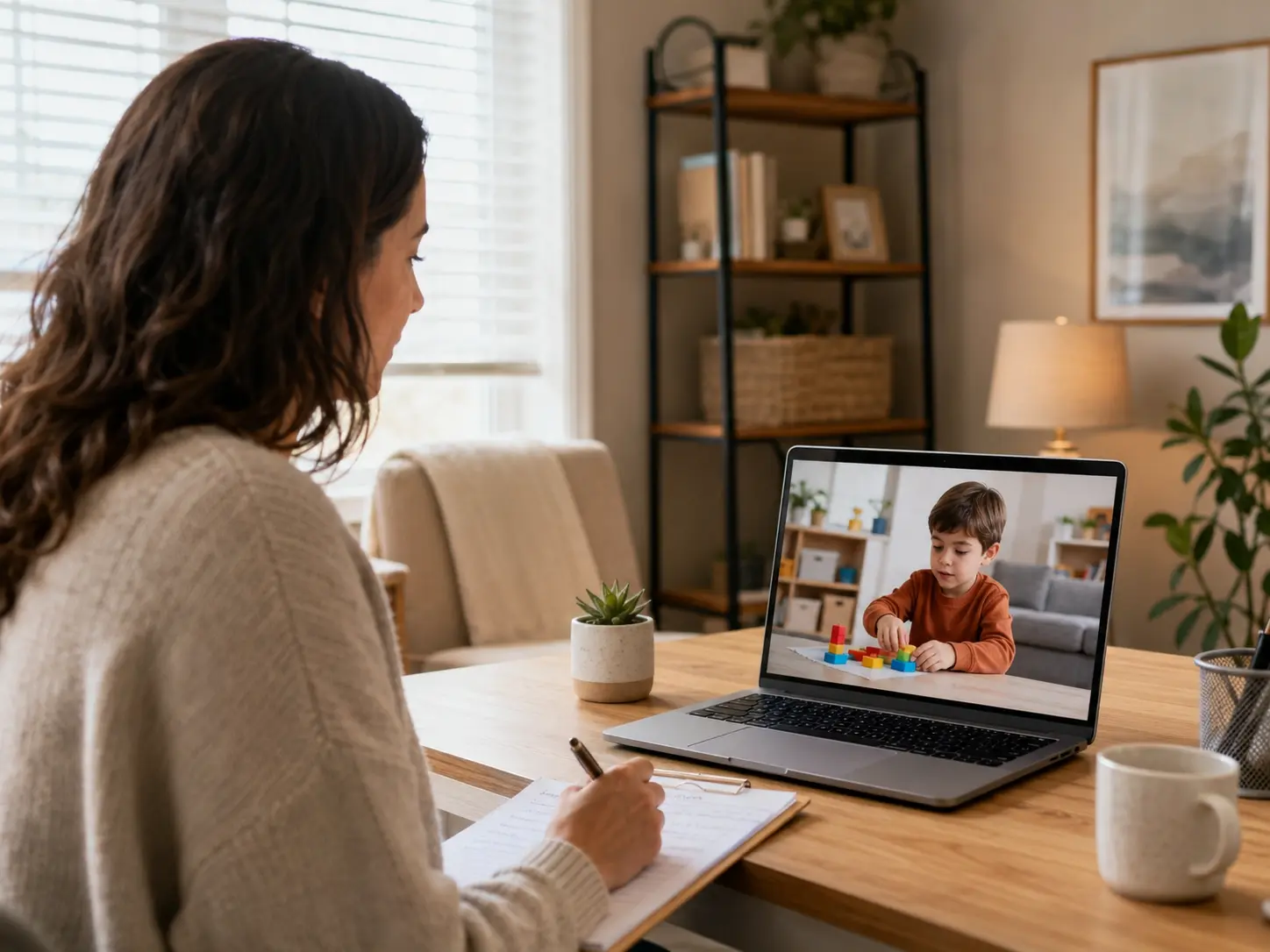
A behaviour analyst observes your child by video across the routines you're concerned about, and interviews you in detail. Where a fuller baseline is needed, our children's autism and behaviour assessments in the UK can be arranged.
Your plan.
Clear, measurable goals with the reasoning explained. You approve it before we begin.
Live sessions.
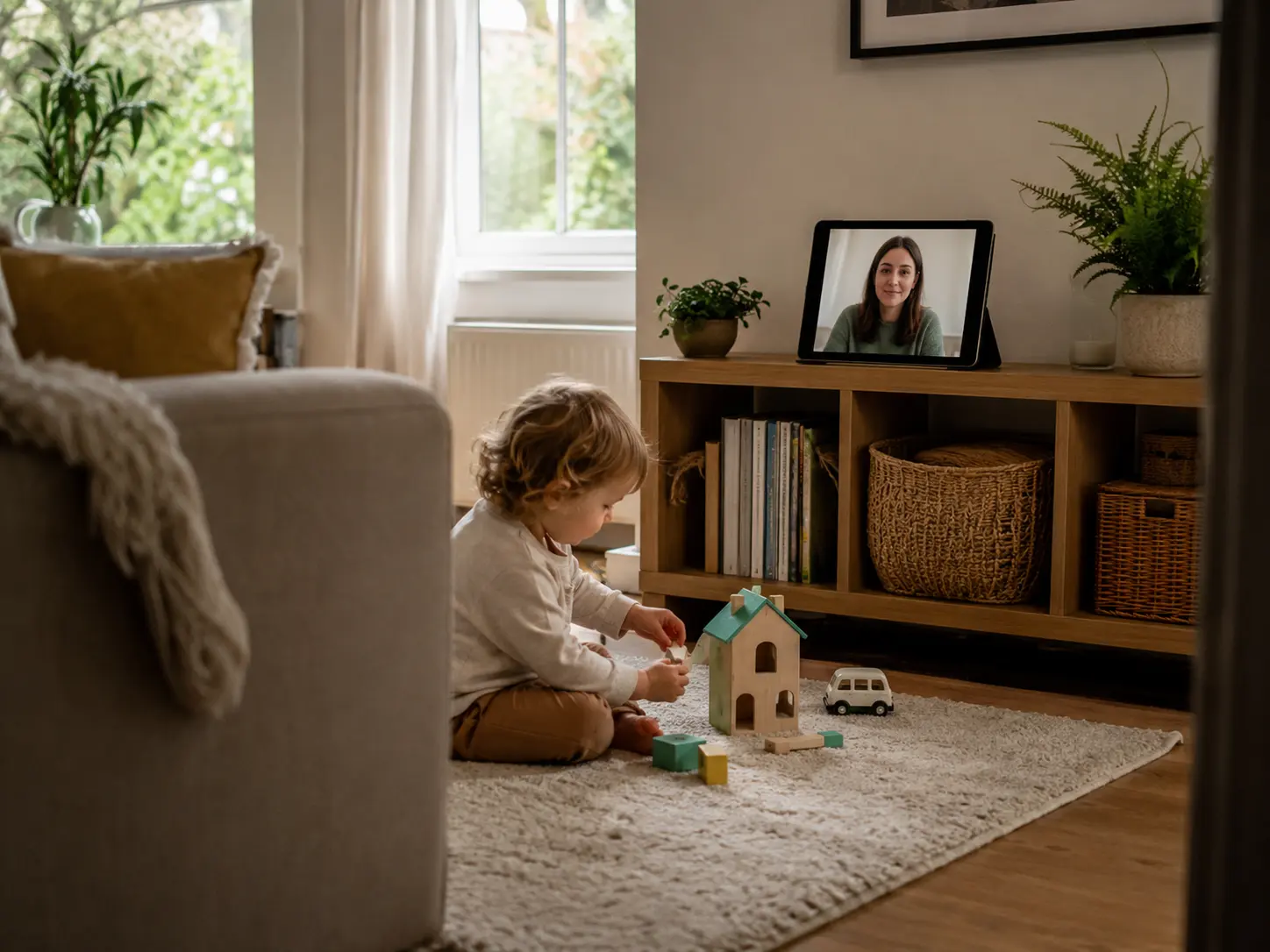
Scheduled at times that fit your day — including early mornings and after nursery. All you need is a phone, tablet or laptop and a reasonable connection.
Between sessions.
You use the strategies. Send short video clips if you'd like feedback on something specific.
Review and adjust.
Data reviewed at agreed intervals. Plans change when the evidence says they should.
What We Work On Remotely
Communication.
Requesting, choosing, protesting appropriately, expanding language, or introducing pictures and devices.
Challenging behaviour.
Identifying the function, adjusting antecedents, and teaching replacement skills — one of the strongest uses of remote consultation.
Daily routines.
Bedtime, mealtimes, toileting, transitions, screen time, getting ready in the morning.
Emotional regulation.
Waiting, accepting "no", coping with change and managing frustration.
Parent and caregiver confidence.
The core of most virtual programmes, and often what changes a household fastest. Many families combine this with structured ABA parent coaching across the UK.
School and nursery liaison.
Joining meetings by video to support consistency between settings.
Our Standards
Qualified, registered practitioners.
Behaviour analysis in the UK is credentialled through the UK Society for Behaviour Analysis (UK-SBA), whose register has been accredited by the Professional Standards Authority since January 2023. Registrants must evidence a current DBS check, safeguarding training and professional liability insurance.
Secure, private sessions.
Sessions run on encrypted platforms. Recordings are only made with your written consent, stored securely, and deleted on request in line with UK GDPR.
Supervised delivery.
Every case is overseen by a senior behaviour analyst.
Honest fit assessment.
If we think your child would do better with in-person support, we'll tell you at the consultation rather than after you've committed.
Available Across the UK
Virtual autism therapy is available to families anywhere in the United Kingdom — England, Scotland, Wales and Northern Ireland. We work with families in the towns and cities below, and just as often with families in rural areas, island communities and smaller towns where local provision is thin.
Many families combine both models — periodic home visits for hands-on work, with online sessions maintaining momentum in between. You can read more about our approach to ABA therapy at home in UK families.
Talk to our team →Frequently Asked Questions
For parent coaching, behaviour consultation and programme supervision, telehealth research reports outcomes broadly comparable to in-person delivery, with high parent fidelity and strong reductions in challenging behaviour. For intensive direct teaching with very young children, in-person delivery generally has the edge. The right answer depends on your child — and we'll give you ours honestly at the consultation.
A smartphone, tablet or laptop with a camera, and a reasonably stable internet connection. Nothing specialist. A tablet propped where we can see the room usually works better than a laptop screen.
No — and often we'd rather they didn't. Much of the value comes from watching your child play or move through a routine naturally while we observe and coach you. Your child doesn't need to interact with the screen at all.
Yes, and many families do. A common pattern is periodic in-person visits for assessment and hands-on teaching, with online sessions between them for coaching and review.
No. Support is based on your child's current skills and behaviour rather than a diagnostic label. Many families begin while still waiting on an NHS assessment — as of March 2026, NHS England recorded 270,701 open referrals for suspected autism, with around 90% waiting beyond the 13 weeks NICE recommends.
Ready for expert support, wherever you live?
Book a free consultation and find out whether virtual autism therapy is the right fit for your family.