
ABA Parent Coaching in the UK
You're already with your child every day. Let's make those hours work harder.
Nobody hands you a manual. You get a possible diagnosis, a waiting list, a leaflet, and a child whose behaviour you're trying to interpret at eleven o'clock at night with no idea whether you're helping or making it worse.
Parent coaching fixes that. Not by giving you more to do — by giving you a reason behind what you're already doing, and a strategy that actually holds.

What Is ABA Parent Coaching?
ABA parent coaching is structured training that teaches parents and caregivers to use behaviour-analytic strategies in everyday routines. A qualified behaviour analyst assesses the situation, explains the strategy, demonstrates how it can be used, and coaches you virtually as you apply it with your child in your everyday routines.
It is not a lecture. It is not a leaflet. It's practical, hands-on, and built around the specific things going wrong in your house.
What Parent Coaching Actually Covers
We start with your priorities, not a curriculum. But most families work through some combination of:
Understanding behaviour — Why behaviour happens — escape, attention, access, sensory. Once you can spot the function, half the mystery disappears.
Preventing difficulty before it starts — Antecedent strategies: warnings, visual schedules, choices, first-then language, reducing demands at the right moments. Most difficult behaviour is prevented, not managed.
Building communication — Teaching your child a faster, easier way to get what they need than a meltdown provides. Functional communication training is often the single biggest change a family makes.
Responding consistently — What to do in the moment, and — just as importantly — what to stop doing. Everyone in the household on the same page.
Handling meltdowns and aggression safely — De-escalation, safety planning, and recovery afterwards for your child and for you.
Daily routines — Bedtime, mealtimes, toileting, getting out of the door, screen transitions, haircuts, dentists.
Sibling dynamics — How to support brothers and sisters who are absorbing more than you realise.
Who Parent Coaching Suits
Parent coaching is often the right choice if:
You're on an NHS waiting list and want to do something useful now
Your child already has support elsewhere, but home is where things fall apart
You've read everything online and it contradicts itself
Direct therapy sessions aren't practical around work or other children
You want to lead your child's support yourself, with expert backup
Grandparents, childminders or partners need the same training you've had
You're exhausted, and you want strategy rather than sympathy
How Coaching Works
Free consultation.
We talk through what's happening and what you want to change first.
Assessment.
A qualified behaviour analyst observes at home and identifies what's driving the behaviours concerning you. For a fuller developmental picture, our children's autism and behaviour assessments in the UK can run alongside.
Priority setting.
We agree two or three targets. Not fifteen. Trying to fix everything at once is the most common reason parents give up.
Teach, model, practise.
We explain the strategy, demonstrate it with your child, then coach you through using it while we're there to give feedback.

Between sessions.
You use the strategy in real life. We give you a simple way to record what happens — nothing burdensome.
Review and build.
We look at what worked, troubleshoot what didn't, and add the next layer.
What Changes for Parents
The measurable outcomes matter — fewer incidents, more communication, smoother routines. But the change parents mention most often is different.
It's no longer guessing.
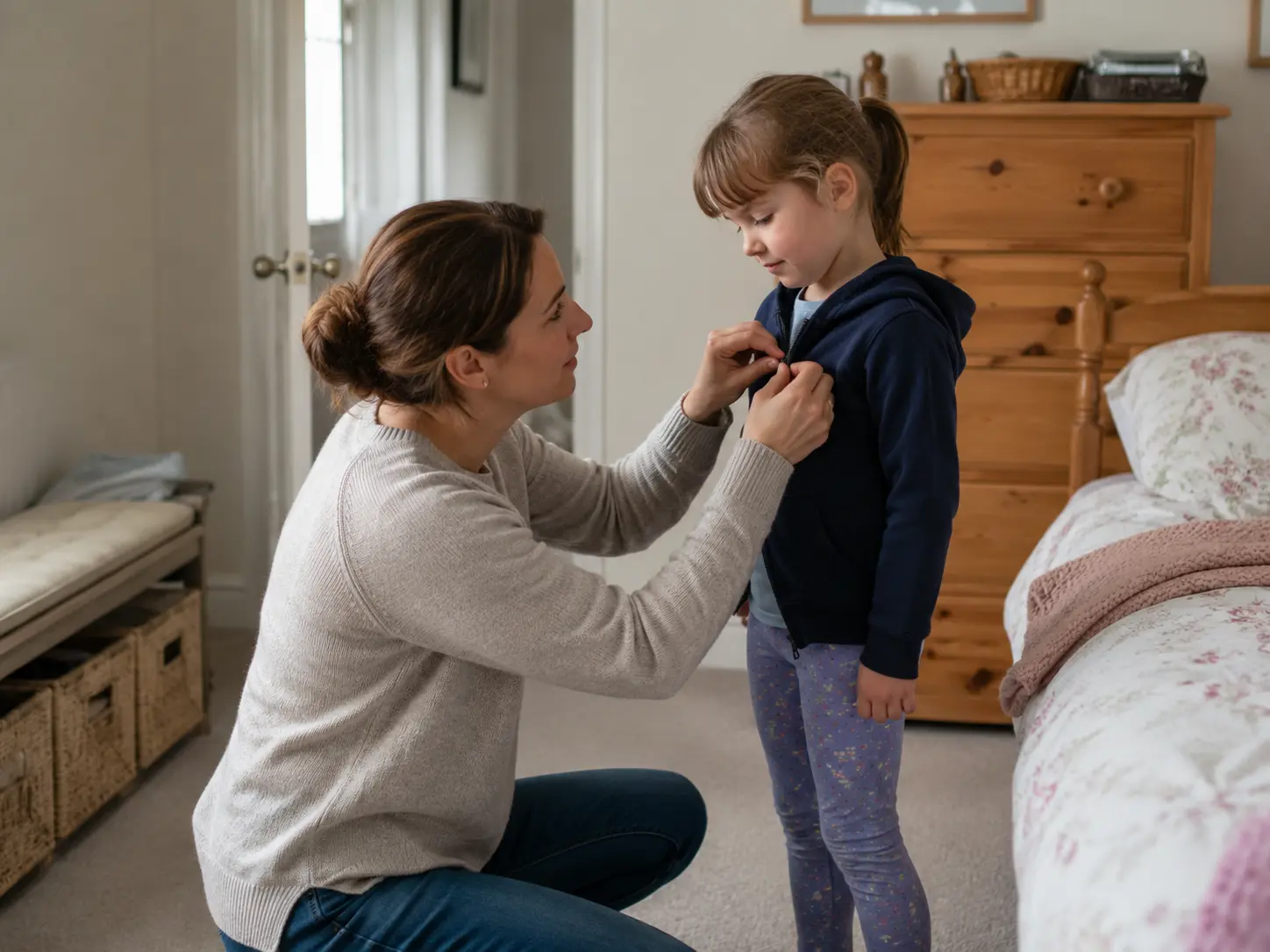
It's knowing why the 4pm meltdown happens, and having something to do about it. It's watching your child ask for help instead of screaming, and understanding exactly why that changed. It's your partner and your mother handling a situation the same way you would.
Research on caregiver-mediated intervention also reports reductions in parental stress alongside child gains — which makes sense. Confidence is less exhausting than uncertainty.
Our Standards
Qualified, registered practitioners.
Behaviour analysis in the UK is credentialled through the UK Society for Behaviour Analysis (UK-SBA), whose register has been accredited by the Professional Standards Authority since January 2023. Registrants must evidence a current DBS check, safeguarding training and professional liability insurance.
Enhanced DBS-checked staff.
Everyone entering a family home holds a current enhanced DBS check.
No blame, ever.
You are not being coached because you've parented badly. Autistic children often communicate in subtle or unexpected ways that are genuinely hard to read without training. That's a skills gap, not a character flaw — and it's ours to close, not yours to apologise for.
Consent-led practice.
We use positive reinforcement. We do not teach punishment procedures, and we don't teach compliance for its own sake. Your child's refusal is communication, and we'll show you how to hear it.
Where We Coach
We deliver parent coaching in family homes across the United Kingdom, including the towns and cities below, plus surrounding towns and commuter areas.
Where regular home visits aren't practical, coaching also works well remotely through virtual autism therapy sessions available UK-wide — live video coaching is one of the best-evidenced uses of remote delivery. Coaching also runs alongside in-home ABA therapy across the UK for families who want both direct sessions and their own training.
Talk to our team →Frequently Asked Questions
They do different jobs. Direct therapy gives your child intensive one-to-one teaching. Coaching multiplies the hours by turning everyday routines into learning opportunities. For many families the strongest results come from combining both — but coaching alone produces meaningful change, particularly for younger children and for behaviour that only happens at home.
No. Coaching is based on what's happening in your home right now, not on a diagnostic label. Plenty of the families we coach are still waiting on an NHS assessment.
Most families see early change within the first few weeks on a specific target, because we start with something achievable. Broader change — routines, communication, regulation — builds over months. We review progress at agreed intervals rather than committing you to an open-ended arrangement.
Yes, and we'd encourage it. Consistency across the people around your child is one of the strongest predictors of whether a strategy holds. Grandparents, partners, childminders and older siblings are all welcome in sessions.
Then we change them. That's not a failure — it usually means our initial read of the function was incomplete, which is exactly what the data is for. Any coach who blames a parent for a strategy not working is doing the job wrong.
Ready to stop guessing?
Book a free consultation and find out whether parent coaching is the right next step for your family.