
In-Home ABA Therapy in the UK
One-to-one ABA therapy at home — built around your child's real routines.
Most of the moments that matter for your child don't happen in a clinic room. They happen at your kitchen table. In the hallway when shoes need to go on. At 7pm, when the day has been too long for everyone.
That's the case for in-home ABA therapy — and it's why we deliver every programme in the family home.
Advance Therapy is a home-only ABA provider. We don't run a centre. Our therapists come to you, work in the rooms your child already lives in, and teach skills exactly where those skills need to be used.

What Is Home-Based ABA Therapy?
In-home ABA therapy is one-to-one Applied Behaviour Analysis delivered in a child's own home. A qualified behaviour analyst assesses your child, writes an individualised programme, and coaches both child and family through everyday routines to build communication, independence and emotional regulation.
Rather than asking how do we stop this behaviour, we start with why is it happening — the trigger, the pattern, and what your child gets out of it. From there we teach a better way to reach the same outcome.
An ABA home therapy programme usually includes:
A functional assessment at home
so we see real behaviour in real context
An individualised skill plan
covering communication, play, social interaction and self-care
One-to-one sessions
with an ABA home therapist, embedded in natural moments of the day
A behaviour support plan
everyone in the house understands and can follow
Parent and caregiver coaching
so progress continues between visits
Ongoing data review
so decisions are based on what's working — not on hope
Why Families Choose ABA at Home
Parents rarely come to us because of a theory. They come because something at home has become genuinely hard. Here's what home delivery actually changes.
Your child is regulated before the session starts.
No car journey, no waiting room, no unfamiliar lights and smells to process. Learning begins from a calm baseline.
We work on problems where they happen.
Toothbrushing difficulties at the sink. Mealtime challenges at your table. Sibling conflict in the living room where it plays out.
The whole family gets the strategy.
Grandparents, siblings and childminders can see the approach modelled and ask questions in the moment.
If you've been searching for in-home ABA services near me and finding mostly clinic-based providers, that gap is exactly why we exist.
Who In-Home ABA Therapy Helps
We support autistic children and children with other developmental or behavioural needs — including those still waiting on a formal diagnosis. We commonly work with children who:
Have limited or emerging speech, or communicate mainly through behaviour
Struggle with transitions, routine changes, or leaving the house
Show aggression, self-injury or meltdowns the family is finding unsafe or exhausting
Find daily living skills difficult — toileting, dressing, sleep, restricted eating
Need support with play and social interaction with siblings and peers
Are approaching a nursery or school transition
Have an EHCP in place, or are applying for one, and need evidence-led home support
Goals are agreed with you and prioritised around what would genuinely improve your family's daily life first.
How Our ABA Home Services Work
Free consultation.
A conversation about your child, your concerns and your priorities. No jargon, no pressure. We'll tell you honestly if we're the right fit.
Home assessment.
A qualified behaviour analyst visits your home to observe, interview and gather baseline data. If you'd like a fuller developmental picture first, our children's autism and behaviour assessments in the UK can run alongside this.
Your individualised programme.
We write a plan with clear, measurable goals and explain the reasoning behind each one. You approve it before anything begins.
One-to-one sessions at home.
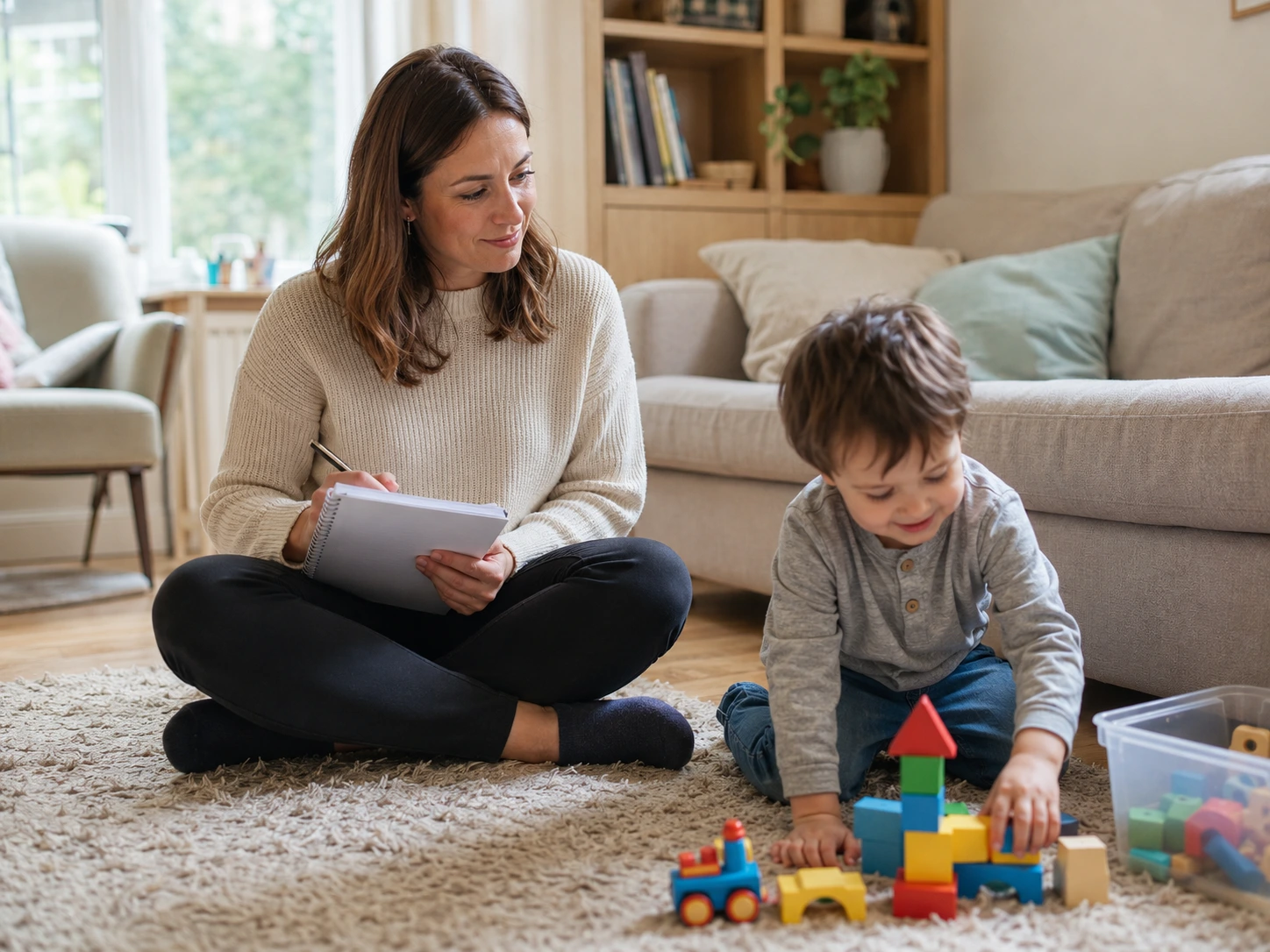
Your home-based ABA therapist uses play, natural teaching moments and structured practice — always under senior supervision.
Parent coaching built in.
You're not an observer. Every family receives hands-on coaching so strategies hold between visits. Some families extend this through dedicated ABA parent coaching across the UK.
Review and adjust.
We track data every session and review formally at agreed intervals. If something isn't working, we change it. That isn't a failure of the method — it is the method.
Our Standards: Who Comes Into Your Home
Letting a professional into your home, around your child, is a serious decision. Here's what we hold ourselves to.
Qualified, registered practitioners.
Our behaviour analysts hold BCBA certification through the Behavior Analyst Certification Board (BACB) — the internationally recognised gold-standard in the field — and are credentialled in the UK through the UK Society for Behaviour Analysis (UK-SBA), accredited by the Professional Standards Authority since January 2023. Registrants must evidence a current DBS check, safeguarding training and professional liability insurance.
Enhanced DBS-checked staff.
Every therapist entering a family home holds a current enhanced DBS check.
Supervised delivery, always.
Therapists never work unsupervised. Every case is overseen by a senior behaviour analyst who reviews data and maintains clinical accountability.
A consent-led approach.
We use positive, reinforcement-based teaching. We do not use punishment procedures. We work with your child's motivations and respect their communication — including refusal. Where behaviour is telling us something, our job is to listen to it, not suppress it.
How to Do ABA Therapy at Home: What Parents Can Start Today
A full programme should be designed and supervised by a qualified behaviour analyst — a plan built on the wrong assumption about why something is happening can make matters worse. But there's a great deal you can do right now, and doing it well genuinely accelerates progress.
Five strategies to use today
Follow your child's lead.
Join what they're already interested in. Motivation is the engine of learning.
Reinforce immediately and specifically.
Respond within seconds. "You asked for help — brilliant" beats praise given ten minutes later.
Make communication easier than the behaviour.
If a point, a picture card or a single word gets a faster result than screaming, screaming becomes unnecessary.
Break skills into small steps.
Handwashing isn't one skill; it's six. Teach and celebrate each one.
Prepare for transitions.
Visual timers, first-then language and a two-minute warning prevent far more difficulty than any consequence resolves.
Simple ABA activities at home
Turn-taking with a favourite toy, starting at two turns and building
Snack-time requesting — small portions create natural chances to ask for more
A picture sequence for the morning routine your child can follow independently
Matching, sorting and posting games for attention and early academic skills
Structured pretend play — feeding a teddy, "cooking" — for imitation and joint attention
Where We Deliver ABA Home Therapy in the UK
We provide home-based ABA therapy to families across the United Kingdom. Our therapists work with families in and around the towns and cities below, along with the surrounding commuter areas.
If you're in a rural area or a region with limited local provision, get in touch anyway. Where an in-person visit isn't practical every week, some families combine home visits with virtual autism therapy sessions available UK-wide to keep support consistent.
What Progress Actually Looks Like
Real progress in home ABA is usually quieter than parents expect. It rarely arrives as a breakthrough.
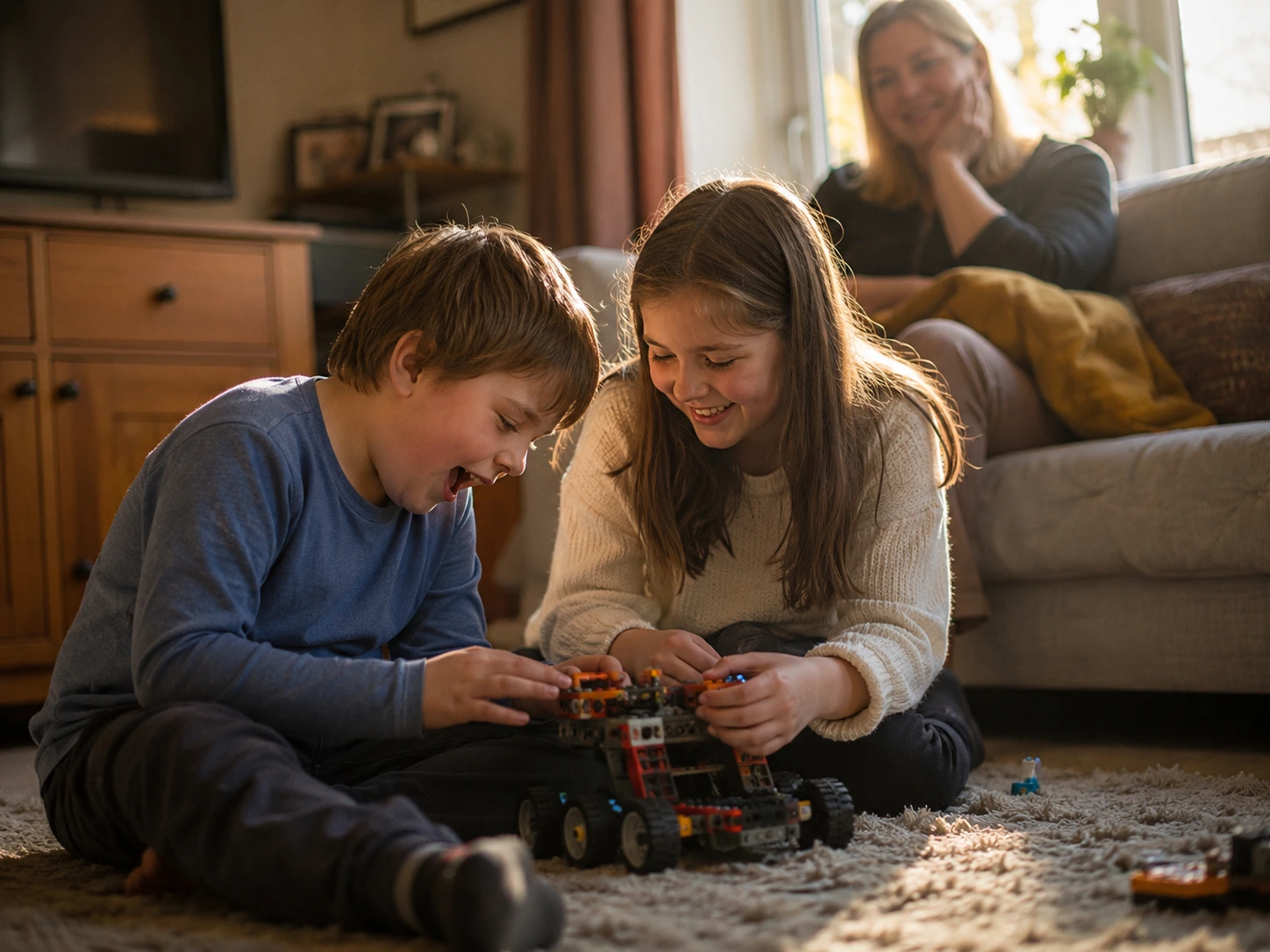
It arrives as a first spontaneous request instead of a meltdown. Getting out of the front door without a forty-minute struggle. Sitting through one family meal. A sibling and an autistic child playing the same game for three minutes. A parent who no longer feels they're guessing.
We measure these things deliberately, session by session, so you can see movement even in the weeks when it doesn't feel like there is any.
Learn more about our approach to ABA therapy at home in UK families, or talk to us about what a programme could look like for your child.
Frequently Asked Questions
Yes — home is one of the most effective settings for ABA, and it's the only setting we work in.A qualified behaviour analyst assesses your child and designs an individualised programme, which your child's therapist delivers through one-to-one sessions in your own rooms and routines. Parents are coached to use the same strategies between sessions, which is where much of the progress is consolidated. What shouldn't be done alone is designing the programme itself — behaviour plans need a functional assessment behind them.
There's no single answer, and any provider offering a fixed number before meeting your child is guessing. Research on intensive early intervention has often examined 20–40 hours per week for very young children, while lower-intensity programmes of around 10–15 hours combined with strong parent-implemented strategies also show meaningful gains. The right intensity depends on your child's age, goals, tolerance for sessions, school commitments and your family's capacity. We recommend a starting intensity after assessment and review it as your child progresses.
Start by understanding her rather than correcting her. Autistic girls are frequently diagnosed later than boys, partly because many mask their difficulties — holding themselves together at school, then unravelling at home. If that sounds familiar, the exhaustion is real and it isn't misbehaviour.
Practical steps that help:
- Reduce demands during the after-school collapse window rather than pushing through it
- Give her a low-effort way to communicate distress before it escalates
- Protect her special interests — they are regulation, not distraction
- Check sensory triggers (clothing, noise, lighting) before assuming the issue is behavioural
- Get a professional assessment of what's driving specific difficulties
An ABA therapist at home can help identify which of these is actually at play for your daughter, and build a plan around her strengths.
By finding the function first. Aggression is communication — it usually means escape from a demand, access to something wanted, attention, or relief from sensory or physical discomfort. Punishment doesn't change any of those needs, so it doesn't work long term.
A behaviour-analytic approach involves:
- Functional assessment — identifying what triggers the behaviour and what maintains it
- Antecedent strategies — adjusting demands, warnings, choices and environment so triggers arise less often
- Functional communication training — teaching a faster, easier way to get the same outcome
- Tolerance and coping skills — gradually building the ability to wait, accept "no", and manage frustration
- A written safety plan — so everyone responds consistently and safely in the moment
Progress is measured by frequency, intensity and duration over time, not by whether one difficult day happened.
No. Many families begin home-based support while still on an NHS waiting list. Our assessment focuses on your child's current skills and behaviours rather than a diagnostic label, so a programme can begin without one.
Ready to bring ABA therapy home?
Book a free home consultation and find out honestly whether we're the right fit for your child.