
Children's Assessments in the UK
Understanding your child before deciding what to do about anything.
You've noticed something. Maybe speech that hasn't arrived. Maybe meltdowns that don't match the trigger. Maybe a nursery report that used a word you weren't expecting.
And now you're stuck between a long NHS waiting list and a pile of contradictory advice online.
A children's assessment gives you the one thing that list can't: a clear, structured picture of where your child is right now — what they can do, what they're finding hard, and what's actually driving the behaviour that's worrying you.
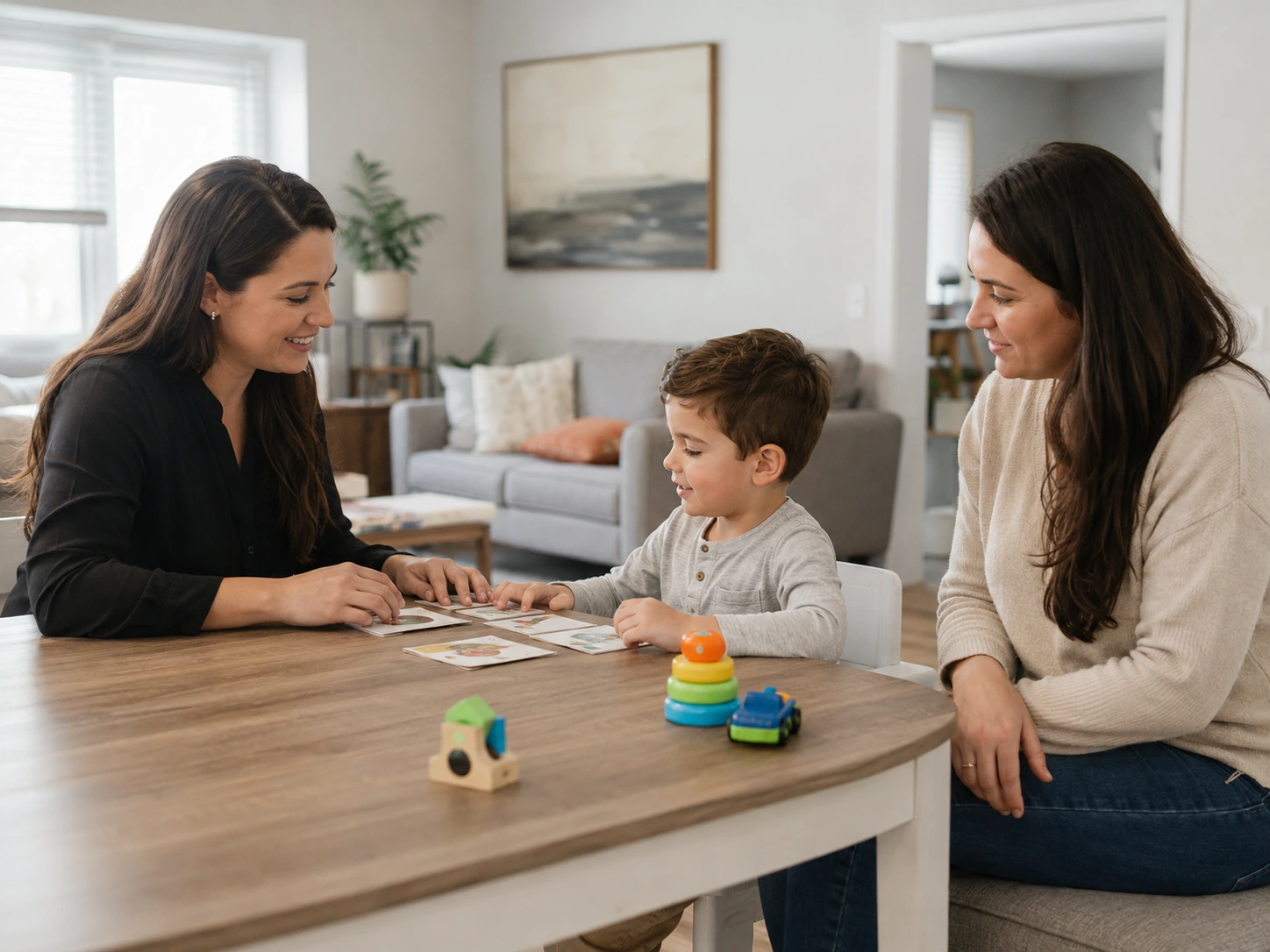
What Is a Child Behaviour Assessment?
A child behaviour assessment is a structured evaluation carried out by a qualified behaviour analyst to identify a child's current skills, developmental gaps and the function behind any challenging behaviour. It produces a written profile and a set of recommended next steps.
It answers three questions:
Where is my child developmentally?
Across communication, play, social interaction, daily living and independence.
Why is this behaviour happening?
Not just what it looks like — what's causing and maintaining it.
What should we do first?
Because you can't work on everything at once, and some goals unlock others.
Types of Assessment We Provide
Functional Behaviour Assessment (FBA)
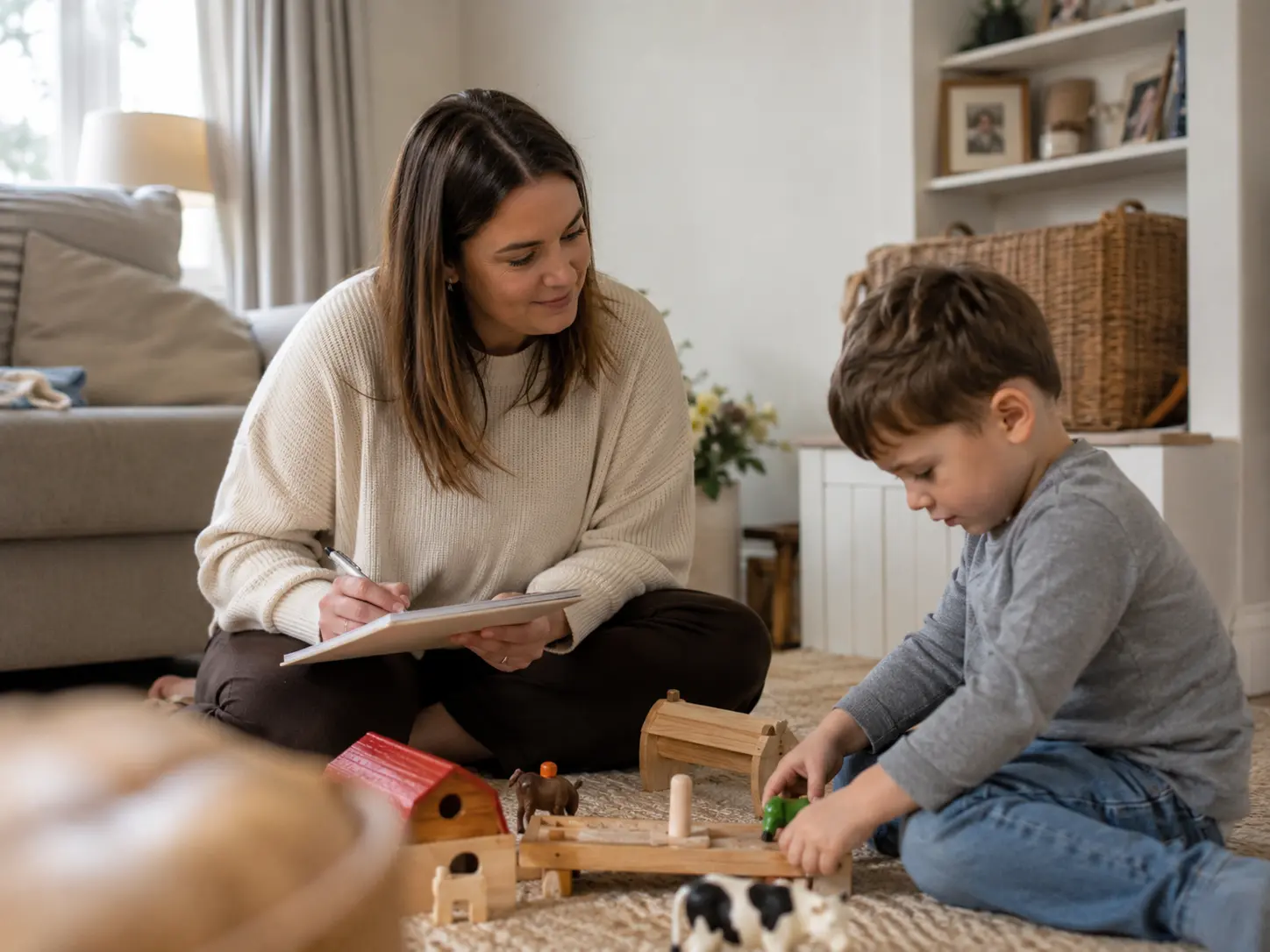
The most important assessment for families dealing with difficult behaviour. Through observation, interview and data collection, we identify what triggers a behaviour and what it achieves for your child — escape, attention, access, or sensory relief. Every effective behaviour plan starts here. Without it, you're guessing.
Skills and developmental assessment
We use established behaviour-analytic assessment tools to map your child's current abilities across language, imitation, play, social skills, self-care and early learning. This produces a baseline you can measure real progress against.
Communication assessment
Whether your child is pre-verbal, has emerging speech, or speaks fluently but struggles socially, we assess how they currently communicate and what would make communicating easier for them.
Daily living and independence assessment
Toileting, dressing, sleep routines, eating, safety awareness — mapped in detail so you know exactly which step to teach next.
Nursery and school readiness assessment
Sitting, attending, following group instructions, transitioning between activities and coping with a new environment.
What You Get at the End
A written report you can actually use — not forty pages of jargon. Every assessment produces:
A clear developmental profile in plain English
Identified priorities, ranked by what would improve daily life fastest
The function behind any challenging behaviour, explained
Specific, measurable recommended goals
Practical strategies you can begin using immediately
A baseline for measuring progress over time
An Honest Note About Diagnosis
We think you deserve straight information here.
In the UK, a formal autism diagnosis is made by a multidisciplinary NHS or private diagnostic team, usually involving a paediatrician, psychologist and speech and language therapist.
What they are good for:
Understanding your child's needs while you wait on an NHS list
Working out what to actually do, which a diagnosis alone never tells you
Providing structured evidence of need for SEN Support or EHCP processes
Establishing a baseline before starting any intervention
And you don't need a diagnosis to begin.
Who Assessments Help
Assessment is usually the right first step if:
You've noticed developmental differences and don't know how serious they are
You're on an NHS waiting list and need direction now
Behaviour at home has become difficult and nothing you've tried is working
Nursery or school has raised concerns and you want an independent picture
You're preparing for an EHCP application and need evidence of need
Your child has a diagnosis, but no one has told you what to actually do
You want a proper baseline before starting therapy, so progress is measurable
What Happens Next
For most families, the report leads directly into a support plan.
Our Standards
Qualified assessors.
Behaviour analysis in the UK is credentialled through the UK Society for Behaviour Analysis (UK-SBA), whose register has been accredited by the Professional Standards Authority since January 2023. Registrants must evidence a current DBS check, safeguarding training and professional liability insurance.
Enhanced DBS-checked staff.
Everyone entering a family home holds a current enhanced DBS check.
Assessment at home.
We assess where your child actually lives. A child in a clinic room is showing you how they cope with a clinic room.
Your data, handled properly.
Reports are shared with you first. Nothing goes to a nursery, school or local authority without your written consent.
Where We Assess
We carry out children's assessments in family homes across the United Kingdom, including the towns and cities below, plus surrounding towns and commuter areas.
If you're outside these areas, ask anyway — we'll give you a straight answer about coverage.
Talk to our team →Frequently Asked Questions
Behavioural and developmental assessment can be carried out from around 18 months onwards, and earlier where there are clear concerns. There's no age at which it becomes "too early" to understand a child's skills — and the earlier a support plan starts, the more developmental runway you have.
No. Our assessments look at what your child can currently do and what's driving their behaviour, neither of which requires a diagnostic label. Many of the families we assess are still waiting on an NHS referral.
It depends on scope. A focused functional behaviour assessment typically takes one to two home visits plus interview time. A full developmental and skills assessment takes longer, as it covers more areas and requires observation across different routines. We'll tell you what to expect before we begin.
It can be submitted as supporting evidence. An EHCP decision rests with your local authority and takes account of evidence from multiple professionals, so no single report guarantees an outcome. We write ours to be specific, observable and evidence-based, which is what makes a report useful in that process.
Yes. Much of the value comes from what you tell us. You know your child's history, their triggers, and the patterns we'd take weeks to spot on our own.
Ready to understand what's really going on?
Book a free consultation and find out whether a children's assessment is the right next step for your family.