
Early Intervention for Autism in the UK
The years between two and five are the ones you can't get back.
If you're reading this, you've probably been told to "wait and see." Wait for the referral. Wait for the assessment. Wait until they're older and things become clearer.
You don't have to wait for a diagnosis to start supporting your child.
What Is Early Intervention?
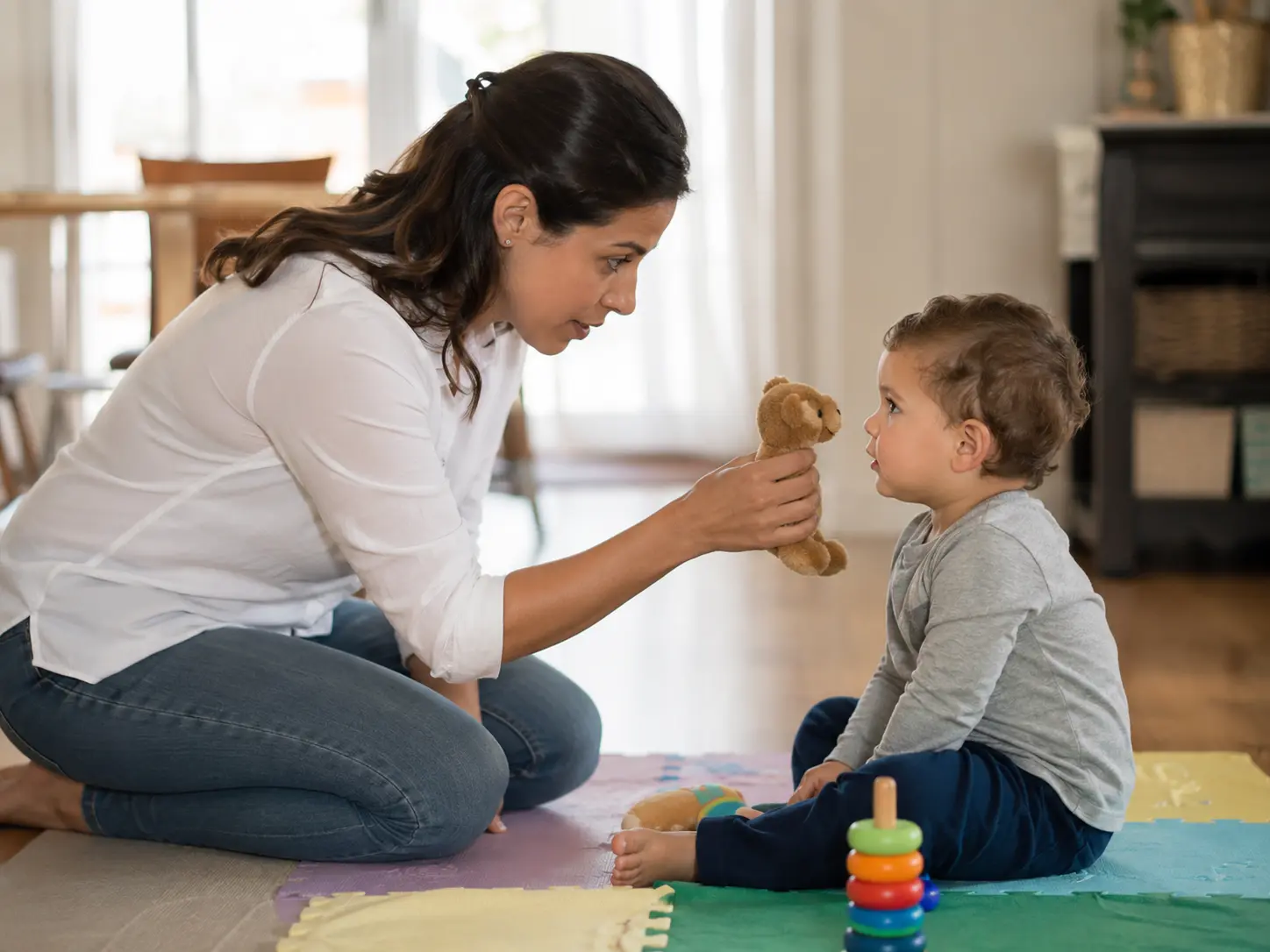
Early intervention is structured, evidence-based support delivered to young children — typically under five — who show developmental differences in communication, play, social interaction or behaviour. It aims to build foundational skills during the period when the brain is most responsive to learning.
Our early intervention programmes use Applied Behaviour Analysis delivered through play, in your home, around your child's real day.
Why Early Matters
Reviews of early intensive behavioural intervention (EIBI) and naturalistic developmental behavioural interventions (NDBIs) consistently report gains in cognitive and language outcomes for young autistic children, with meta-analyses citing improvements in the range of 9–15 IQ points alongside language development. Effects on core autism traits are more variable, and honest providers say so.
Younger children respond more strongly — than older children to the same interventions.
Teaching in natural routines — improves generalisation, so skills don't stay stuck in one setting.
Parent involvement significantly amplifies outcomes — NICE guidance supports involving parents and carers directly in psychosocial interventions.
Communication is the highest-leverage early target — because much difficult behaviour is a child communicating the only way available to them.
Early intervention isn't about making an autistic child appear non-autistic. It's about giving a child tools — to be understood, to make choices, to cope with a world that isn't built for them.
Early Signs Worth Acting On
You don't need certainty to seek support. If several of these apply, an assessment is worth having:
Limited or no words by two, or words that appeared and then disappeared
Rarely responds to their own name
Little pointing, showing or bringing things to share
Limited eye contact or difficulty following where you're looking
Plays with parts of toys rather than with the toy — spinning wheels, lining up
Strong distress at small changes in routine
Repetitive movements — hand flapping, spinning, toe-walking
Strong sensory reactions to sound, texture, clothing or food
More interested in objects than in people
Frequent meltdowns that don't seem to match the trigger
What an Early Intervention Programme Looks Like
Free consultation.
We listen to your concerns and tell you honestly whether we think we can help.
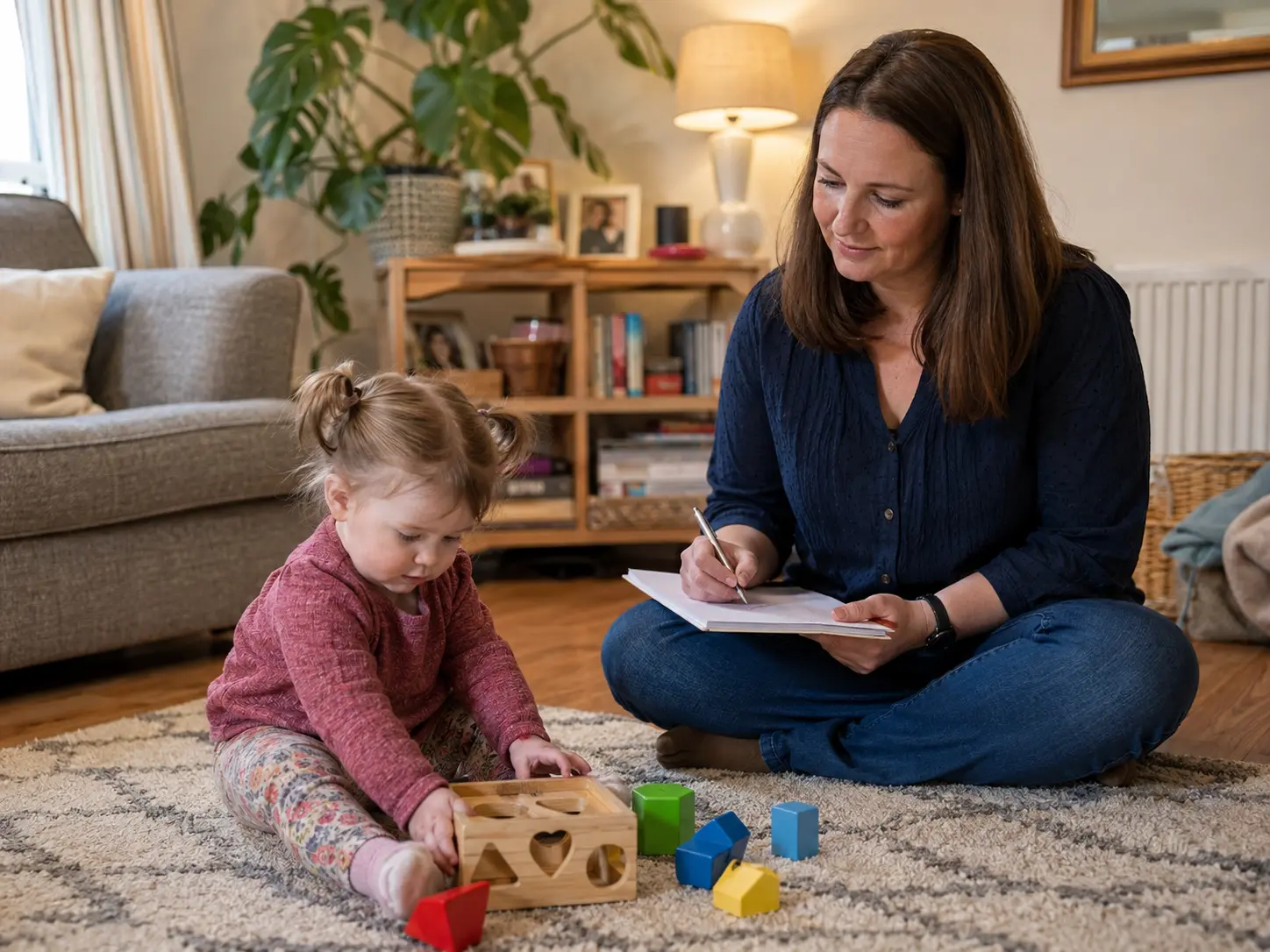
Assessment at home.
A qualified behaviour analyst maps your child's current skills and identifies what's driving any difficult behaviour. If you'd like a fuller picture first, our children's autism and behaviour assessments in the UK provide the baseline.
A play-based plan.
Goals are set across communication, imitation, joint attention, play, social interaction and daily living. Everything is taught through activities your child already enjoys.
One-to-one sessions at home.
Delivered by a therapist, supervised by a senior behaviour analyst. Sessions follow your child's motivation, not a script.
Parent coaching throughout.
You learn the strategies as we use them, so learning continues in the twenty-three hours a day we're not there. Some families extend this through ABA parent coaching across the UK.

Data, review, adjust.
Every session is measured. If a target isn't moving, we change the approach — not the child.
What We Work On
Communication first.
Requesting, protesting, choosing, naming. Whether through words, signs, pictures or a device — the goal is being understood.
Joint attention and social connection.
Sharing focus, responding to their name, looking where you point, bringing things to show you.
Play skills.
Functional play, imitation, turn-taking, and eventually pretend play — the foundation of most early social learning.
Daily living and independence.
Sleep routines, mealtimes, toileting, dressing, tolerating a hairbrush or toothbrush.
Emotional regulation.
Coping with waiting, with "no", with transitions, with things not going the expected way.
Nursery and school readiness.
Sitting, attending, following group instructions, and coping with a busy, noisy environment.
Our Standards
Qualified, registered practitioners.
Behaviour analysis in the UK is credentialled through the UK Society for Behaviour Analysis (UK-SBA), whose register has been accredited by the Professional Standards Authority since January 2023. Registrants must evidence a current DBS check, safeguarding training and professional liability insurance.
Enhanced DBS-checked staff.
Every therapist entering a family home holds a current enhanced DBS check.
Supervised delivery, always.
No therapist works unsupervised. Every programme is overseen by a senior behaviour analyst.
A consent-led, play-first approach.
We use positive reinforcement. We do not use punishment procedures. We respect your child's communication — including refusal — and we build on their strengths and interests rather than working against them.
Where We Deliver Early Intervention
We deliver early intervention in family homes across the United Kingdom, including the towns and cities below, plus the surrounding towns and commuter areas.
Where in-person visits aren't practical every week, some families combine home sessions with virtual autism therapy available UK-wide to keep momentum between visits. You can also read more about our wider approach to ABA therapy at home in UK families.
Talk to our team today →Frequently Asked Questions
The earlier the better, and under five is where the evidence is strongest. Support can begin from around 18 months, and in some cases earlier where concerns are clear. That said, "too late" doesn't really exist — children continue learning at every age. Early simply means more developmental runway.
Yes. Our approach is based on your child's actual skills and behaviour, not on a diagnostic label. Many families begin early intervention while still waiting on an NHS assessment, and continue alongside the NHS pathway once it starts.
There's no universal number, and anyone quoting one before meeting your child is guessing. Research on intensive early intervention has often examined 20–40 hours per week, while lower-intensity programmes of around 10–15 hours combined with strong parent-implemented strategies also show meaningful gains. The right level depends on your child's age, stamina, nursery commitments and your family's capacity. We recommend a starting point after assessment and review it as your child progresses.
That isn't our goal, and we'd be cautious of anyone who promised it. Autism isn't something we treat as a problem to remove. Early intervention builds skills — communication, independence, regulation, play — so your child can navigate daily life with less frustration and more choice. The outcome we aim for is a child who is understood and capable, not a child who masks.
Absolutely, and we'd usually encourage it. Nursery offers peer interaction and routine that home sessions can't replicate. Our programme is designed to work around, not instead of, nursery hours.
Ready to start early support?
Book a free consultation and find out whether early intervention is the right next step for your child — no diagnosis required.